Archive for April, 2012
How do I fix that now???
Cooking and Baking go hand in hand with Chemistry. Now before your roll your eyes, I’m not going to give you a lecture on Chemistry. TRUST ME, I am the wrong person for this. Give me mathematics, programming, engineering and I’m your gal; give me chemistry and all I make is smoke and noxious fumes
Most of the time it’s the way our ingredients/chemicals mix and combine to give us an amazing result. But just like chemistry, one false move in the kitchen can turn something fantastic into something horrific.
How many of you have over salted, burnt, over cooked, over sweetened, under baked, over spiced, over thinned etc.. something in the kitchen?
C’mon, don’t be shy. You’ve all done it at least once. Cooking and baking is made up of trials and tribulations.
Yeah but.. all that hard work for nothing, right? I mean you have to throw it away and start over.. right? Not necessarily my dear friends. Try these tips to salvage your meal.
Too Acidic
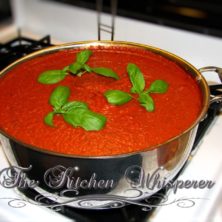
Sometimes a tomato-based sauce will become too acidic. When dealing with an acid, the neutralizing agent should be a base. Curb an acidic bite in dressings and sauces with a small pinch of baking soda. It will neutralize the sting without adding unwanted flavor. Some cooks prefer to add sugar for the same reason. Sugar, either granulated, or from naturally sweet veggies like carrots, can also provide a pleasant balance.
Way Too Salty
If you’ve added far too much salt to a sauce or soup, you might want to slice a raw potato and add it to the mix. Allow the potato slices to become translucent–they should absorb much of the excess salt. Be sure to throw them away before serving. You could also add more unsalted water to dilute the sauce slightly. Another method is to add more liquid, some sugar or an acidic solution like vinegar to balance out the brine.
Burnt Cream or Custard
So you’re making this fabulous pudding or cream base sauce only to realize that you forgot to stir it the whole time. And when you go to stir it you see that the bottom has burnt. Crap! Even the most seasoned chefs have been known to burn a custard or two. As soon as you notice that the bottom layer of custard or cream has burned, stop stirring immediately. You don’t want to stir in the burnt portions. Pour the remaining custard, pudding or cream into a new pan and keep cooking.
Stale Bread
Restore life to stale bread by slipping it into a 325 degree F oven in a lightly dampened paper bag. When the bag is dry, your bread will have regained its former softness. Stale bread is a natural fit for breadcrumbs, croutons, crostini, bread pudding or Panzannella.
Fire in the hole – Overspiced Foods
Tame the sting of excess heat with a touch of sweetness. Tomatoes, or even a squirt of ketchup, can add sugar and acid which will fan the flames. If a touch of dairy won’t interfere with the flavor of the dish, add a dollop of plain yogurt. If you’ve got more of your ingredients on hand, make a double batch with everything but the hot stuff, and blend the two together. Don’t just add water – all you’re doing is thinning it out.
Over-Thinned Sauce
So you’ve been making your infamous sauce all day only to realize that it’s way to thin. I mean no way would this stuff stick to pasta or anything. Now granted what you add to thicken it depends on the type of method to thicken in. A combination of flour and butter will often thicken up sauces if added in small batches. Cornstarch is usually a good thickener, but it might help to mix it with water first. A little goes a long way. Some cooks use dried potato flakes as an emergency thickener. If the sauce would not do well with these ingredients, you may try a reduction. Allow the excess liquid to boil out of the sauce until it is reduced in volume. Now all of these are more for cream type bases/gravies. To thicken pasta or marinara sauce, add in some tomato paste and or some grated cheese.
Unpopped Popcorn
How many of you haaaaaaaaaaaaatemaking a big ol bowl of popcorn only to have 1/2 of the kernels not pop? Now granted I haven’t tried this on microwave popcorn (um yuck!), but this does work on normal popcorn poppers. The kernels may have dried out, and they need some moisture to pop. Soak them in water for about 5 minutes, drain and pat them dry and try again. If that doesn’t work, place them in a container in the freezer overnight and go for a re-pop the next day.
Hard Cookies
You want those soft ooey gooey sumptious cookies only to have them hard as a rock. Never fear. Put them in an air tight container and add 1 slice of white bread to it. By the next day they will be soft.
Dimpled or Crumbled Cakes
I often here “Hey, my cake crumbled when I tried to take it out of the pan” or “it’ got ridges on it from the wire rack”. Cool cake in pan 10-15 minutes before loosening the edge and turning it onto a wire rack.
Hint: To easily remove a cake form the pan, place a double thickness paper towel over the wire rack. The towel prevents the wire bars from breaking the crust or leaving imprints on the top of the cake
- Turn hot cakes out gently.
- Cool cake at least 1 hour before decorating.
Hint: When frosting a cake, chill the cake before spreading filling and/or frosting. (Cake will be much easier to work with.) Also, apply a thin layer of frosting to the cake and then refrigerate until it is set before applying the final, heavier layer of frosting. This will seal in the crumbs and ensure a clean final appearance.
Overwhipped Cream – now ya have butter
Whipped cream is the perfect addition to pies and other desserts. It’s not hard to make, but you can’t just stand there and idly whip away to your heart’s content. Overwhipping cream can ruin it if you’re not careful. If taken too far, whipped cream turns to butter. Stop whipping when the cream is still smooth and can hold soft peaks. Cream whips best when it’s cold and whipped in a cold container. If you overwhip cream it will start to look chunky. You may be able to fix it by adding more cream and whipping it by hand. If it’s very chunky and stiff, you’ve made butter and you’ll have to start over. But hey! At least you can use your mistake!
Ya shoulda known better… common kitchen mistakes
Admit it, you’ve done it. I’ve done it… we’ve ALL done it! We’ve tried to take ‘short cuts’ in the kitchen to only have them backfire leaving us Face-palming ourselves while hearing a ‘DOH!’ in the background. You knew better but ya still did it anyway.
My friends you’re not alone. Recently I was with a bunch of friends and we were discussing our failures in the kitchen as well as some tips/tricks we all learned along the way.
I’ve put together a list of some of my ‘Ya shoulda known better’ kitchen tips.
Oven Hot Spots
So often I hear “I’m a horrible baker”, “I can’t bake anything as it comes out burnt, raw, cooks unevenly or lopsided”. Chances are it’s not you but it could very well be your oven. Test your oven’s temperature as well as test for hotspots. There are 2 methods – test it with an oven safe thermometer. If you set your oven to 350 but your thermometer reads 375, then adjust the setting (review your owners manual for temperature adjustment). Next do the “bread test”. Arrange bread slices to cover the middle oven rack. Bake at 350° for a few minutes, and see which slices get singed―their location marks your oven’s hot spot(s). If you know you have a hot spot in, say, the back left corner, avoid putting pans in that location, or rotate accordingly.
Dry meats
So you’ve been salivating over that big old fat juicy steak on the grill. Silently counting down for the moment you can yank it off the grill and stuff it in your mouth. The grill marks are perfect, you have that incredible sear. You slap it on your face and dive right in only to find out about 4 bites into it that it’s dry and tough. What happened? The first few bites were awesome but the rest is like shoe leather. And I bet if you look on your plate surrounding it, there’s a big ol’ pool of juices around it. Most likely you didn’t let the meat rest for 5-10 minutes before hooverizing it. You need to let it rest. Period! That cooling-off time helps the juices, which migrate to the center of the meat, to be distributed more evenly throughout. The resting rule applies equally to an inexpensive skirt steak or a premium dry-aged, grass-fed steak, as well as poultry. With small cuts like a steak or boneless, skinless chicken breast, five minutes is adequate. A whole bird or standing rib roast requires 20 to 30 minutes. Tent the meat loosely with foil to keep it warm.
Lumpy Gravy
You’ve slaved all day making that gorgeous piece of meat. You have the sides all in place and you’re fixin’ to make the gravy. You add your flour or cornstarch only to find pea-sized white lumps all through it. And no matter how hard you whisk it you just can’t get rid of them. Trust me, no one and I mean NO ONE likes lumpy gravy (at least not lumps of flour!). What you want to do is take out some of the broth from the pan and place it into a bowl. Next add your flour/cornstarch to that. Whisk it into a flour slurry and then pour it into the rest of the pan , whisking the whole time, until the gravy comes together. “Yeah, but I got lumps now!!!” Never fear, it’s not ruined but it’ll take another step. If lumps happen, pass gravy through a sieve or strainer, or puree it with an immersion blender. The only downside of this is if your gravy is to have pieces of stuff in it – onions/mushrooms, etc. You can either discard them or go through the sieve/strainer picking out those pieces.
Thin and flat cookies
So I’m all about thick ‘n chewy fat cookies that have a crisp to the outside but a soft ‘n chewy center. Gingersnaps and the like should be thin and crispy. You mix up your batch of dough, bake your cookies only to find out your perfectly rounded scooped chocolate chip cookie is one giant flat mess. I mean we’re talking flat as a pancake mess. It’s good but very crispy but not burnt. So what gives? That’s not how they looked in the cookbook. Keep your butter cool, right until baking. Butter starts to melt at 68°, and once that happens, its water-fat emulsion breaks and there’s no getting it back. Cold, emulsified butter helps give baked goods structure by taking in air when mixed with sugar. Even if your recipe calls for softened butter, don’t. Well you can but *I* personally don’t do that and my cookies rock… just sayin. You can use a cheese grated and grate the frozen stick of butter into your batter OR, put it in as chopped cubes and then mix. Next, chill your dough for at least an hour. This will give the butter time to re-solidify. Trust me on this… this works!
Charred Skin/Raw Center
I am no where near a BBQ expert; heck I’m more of a beginner but certain things ‘make sense’. Ever have company over, got your famous BBQ sauce made, steaks and chicken on the grill. You are the GRILL MASTER, yes you are. The chicken is nicely browned/grilled only when you go to cut it, it’s raw (ITts RAWWWWWWWWWWWWW! – sorry, had to channel my inner Gordon Ramsey). Don’t lose your grill master status – just follow these basic ‘ya shoulda knowns’ – 2 types of heats are what you need: indirect and direct. Set one side of a gas grill to medium-high and the other to low, or build a fire on one side of a charcoal grill. (Make sure your grate is clean and oiled to prevent sticking.) Start the chicken skin-side up on the low- or no-heat side, and cover the grill. After a few minutes, when the chicken fat starts to render, flip the meat, skin-side down. Point the breasts’ thicker ends toward the hot side to help them cook evenly. Cover and grill for about 25 minutes. When the meat is done (165° at the thickest part of the breast), crisp the skin on the hot side for a minute or two, moving it as needed to avoid flare-ups. Wait until the last few minutes to brush on barbecue sauce: The sugars in the sauce will char quickly.
Price vs Quality
Some people think that just because it says ‘Olive Oil’ that they are all the same. They couldn’t be further from the truth. If you use a 99cent bottle of olive oil and then use a $10 bottle of olive oil in the same dish you will most certainly notice the difference! Now I am not saying you must use the most expensive item in each dish – if you can afford to do this then we need to talk about me, my bistro and your investing. You want to use what is most economical within your budget. Trust me, I’d love nothing more than to cook with black truffles all day long but since I’m not a Hilton or related to Ina Garten (so love her). Always shop for the best ingredients that you can afford. They’re the foundation of good cooking and why we strive not to make the mistakes described here. Choose top-notch produce, meats, cheeses, spices and oils. Using poor quality ingredients: No matter how mad your baking skills, if you’re using cheap, waxy chocolate, you’re going to end up with a poor end product.
Pie Crusts are tough
A tough pie crust is primarily caused by too much handling – whether it be over-mixing or using too much re-rolled scrap dough. The toughening of a crust typically happens after the fat has been cut or rubbed into your flour. The next step is to add in your liquid – and this step is critical. Once you combine flour with liquid and begin mixing, gluten forms and gluten is not desired in pie crust. Therefore, once you add the liquid, stir only until the dough begins to come together, then turn out onto a surface and work into a ball. Press into a disc and let the dough rest according to your recipe. CHILL CHILL CHILL! Trust me on this. Chill it for a good hour.
Soggy Pie Crusts
There are a few things that you can do to prevent a soggy crust. First, make sure that your oven is hot enough and set to bake (the heat needs to come from the bottom). Filled pies that are not frozen bake at between 425F-450F. Second, if you are making a fruit pie, which contains a lot of moisture, blend the fat into the flour slightly more than you normally would. This coating of the flour produces a water resistant barrier and prevents moisture from being absorbed into your crust.
Expired Ingredients
Yes, even flour, baking powder and oat bran can go off. Nuts, dried fruit, and even chocolate have a shelf life, and if you can’t remember when you bought them, or they smell anything other than sweet, chuck ‘em.
Sunken Centers
You have a sink in the center of your baked goods (and they are not doughnuts). This can be caused by a number of mistakes, the first of which is continuous opening and closing of the oven door. If you want to check on your dessert look through the oven window until baking time is nearly completed. The constant open and close exposure to cold air will make your dessert fall. Another reason you might have a sink in your dessert is that there was too much liquid in the batter for your dessert. A cake that has too much liquid will not rise as it normally should, leaving you with a wet mess.
It just falls apart
Your cake or bread falls apart or sticks to the pan after baking. First of all, you have to resist the temptation to take your finished product out of the pan or off of the baking sheet until they cool. If it is still warm it will lead to half of it sticking to the pan and the other half coming off. Allow sufficient time for your dessert to cool so that the whole dessert picks up cleanly and easily.
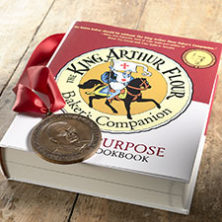
The King Arthur Flour Baker’s Companion
I’ve been using King Arthur Flour products for what seems to be a lifetime. Don’t get wrong, I’ve tried the local store brand flours, to some more expensive to some significantly less expensive. The thing is, I know for a fact that every time I use KAF flours i get the exact same expected result; perfection. Over the years I got to ‘know’ some of the bakers there as well. With the advent of Facebook and blogs, I’ve become a regular on their FB wall.
I had received this book several years ago and was blown away by it. It’s simplistic written; almost ‘homey’ and comforting. It’s written with care and passion. It’s written as not only a cookbook but as training guide often offering up explanations instead of “just add this” and “do it like this”. If you’re like me, you want to know the hows and whys of things. Not to be told what to do and you’ll get this. This book is written with passion and pride.
I would say this book is for the every day home user from the beginner to intermediate baker. It’s well written however my only real complaint is *I* prefer to see pictures of what the recipe is to produce. But taking into consideration that this book is over 600 pages long, adding pictures to each recipe would pretty much rank this book to the size of “War and Peace” and most likely a highly inflated price tag. The book is fairly marked on their website for around $23 and honestly worth every penny!
No home baker should be without this book! This will be your go-to book and I can guarantee that if you’re like me, you’ll have more pages marked in this book than any of your others.
I have to first start off by saying “THANK YOU” to the bakers and authors of this book for giving you in the very beginning a guide on measuring and telling you exactly what the difference is with cups to ounces and so forth. People tend to argue over what a cup of flour weighs. Honestly it depends on how you measure out that cup first – do you sift it first, do you spoon and swoop or do you just scoop it up?
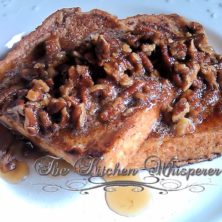
The first real chapter discusses Breakfasts.. god I love breakfast foods! I could so eat breakfast for dinner! Now while I’m not generally a fan of waffles, pancakes or heavy stuff like that I have to recommend their recipe for Pumpkin Prailine Waffles with a side of the Butter Pecan Syrup. Seriously sinful!
Next we venture on to Muffins. Glorious muffin recipes are abundant here! What I’m huge on with any recipe is versatility. They’ve done this with their All-Star Muffin recipe giving you at least 10 different adaptions you could make based off of one basic recipe! And for those that are looking for something less sweet you can dive into their coffeecake recipes, fritters or quick breads.
Buckels, Crisps/Crumbles and Cobblers.. oh my! That’s what you’ll find in the next chapter. So tell me, do you know what the difference is? I had an inkling but was never 100% certain. KAF clearly explains the differences and now it ‘makes sense’. Let me give you a little secret here.. they have a recipe for Pear Crumble… AMAZING! To kick it up a notch, add in fresh blueberries and lemon zest. Oh dear LORD!
Crackers and Flatbreads making up the next chapter. It wasn’t until about 5 or 6 years ago did I attempt to make my first batch of crackers. I was always pretty intimidated by it. Trust me… it’s SIMPLE and you will never EVER buy store bought boxed crackers again!
Now when one thinks of King Arthur Flour you immediately think of flours and breads. Well this book does not disappoint you at all. Probably one of the biggest chapters in this book is about yeast breads. Growing up my mother was always making homemade breads. I can remember her getting up very early with me tugging on her apron strings. She’d pick me up, put me on the edge of the table with my own rolling pin, a cup of flour and glass of water. She would bring out her big flour board, dust it with flour and get to kneading and making her bread. In the beginning I ended up making more of a mess and yes, paste, than actual dough. But eventually I started paying attention and mimicking her, kneading the dough with love and coupling it ever so gently. A lot of these recipes in this chapter remind me of those days from long ago. Probably one of my favorite bread recipes in this book is for Brioche. It, for me, is one of the most universal breads. It’s eggy and dense but almost “light” at the same time. Sunday mornings were filled with french toast at our house made from fresh Brioche she made the day before. This recipe reminds me of Sundays at home. In this chapter you go from your basic white breads, to brioche’s, to Sweet braided bread, to bagels to pretzels and so much more! Just for this chapter alone, this book is worth it!
This whole chapter on breads flows nicely into another favorite of mine, Sour Dough. Once you have a great ‘mother’, you are set for life. This starter will last you a lifetime and through out generations providing you take care of it. I did a 8-day posting on here on how to create your own mother/starter from scratch and including instructions on how to take of it. What I like most about this chapter is the discussions and explanations. Don’t get the wrong, the recipes are great too but the sidebar notes are really interesting. Remember.. I’m a very analytical thinker and need to know the hows and whys. KAF explains it quite nicely!
Now smack dab in the middle of the next chapter, Cookies and Bars, are the only color photographs in the book. Lemme tell you what people… for those that eat with their eyes.. You will LOVE LOVE LOVE this! My word these pictures, sparse they may be, are divine! Again, just like the last chapter, the side notes (how to keep cookies soft, crispy, when to roll and so forth) are awesome! There is a recipe in this chapter for Vanilla Dreams.. oh my dear heaven! Just like the recipe says, it’s unlike anything you can bake using baking soda or powder. They literally melt-in-your-mouth!
The next chapter we tackle Cakes. Now don’t get me wrong, there is nothing wrong with using a boxed cake mix. It’s inexpensive and pretty simple (add oil/eggs and water). The outcome is pretty good but until you’ve made one from scratch, you have no idea what you’re missing! There’s a section in this chapter just on Pound Cakes. Lord knows I love a good pound cake. There is one in there for a chocolate pound cake. Make that one, slick it about 1/2″ thick. Between 2 slices of cake add a layer of mascarpone spread (whipped mascarpone, crushed strawberries and a smidge of sugar). Make it like a sandwich and grill over medium. When it’s done, drizzle fudge sauce and top with fresh berries. You can thank me later! As a perfect accompaniment to this chapter they a sub section dedicated to frosting, fillings and glazes. You can put down the tub of canned frosting after this!
Pies, Tarts and Quiches are discussed in the next chapter. I have a confession to make. Up until about 20 years ago I was truly intimidated on making a pie crust from scratch. I mean they looked so incredibly hard and delicate. Until one day, I decided to give it a whirl (okay truth be told, the store was out of pre-made ones). I sat there and read my Mother’s recipe and sadly it didn’t work. It just crumbled and was tough. The crust was thick and dry and just blah. It was until I sat down and looked at it logically. You want that light airy flaky crust but also sweet (providing you’re making a sweet pie). It make sense to use ice cold ingredients, including butter chunks to make it stay that way. As the butter melted it would leave pockets in between the layers of flour thus making it flaky and airy. It took me several years to finally perfect my recipe and now it’s like a piece of ‘cake’ to turn out a new pie crust. What’s great about this chapter is KAF explains the basics about types of pie crusts (flaky, savory, sweet, tender, etc…). Plus their recipes are killer! And let me tell you what, they have a recipe in here for Cheddar Cheese Piecrust. HOLY MOLY!!! Make this and add a seafood type filling with chives. OMG it’s to-die-for!!!
The next chapter, Pastry and Viennoiserie (basically made from a yeasted dough), is for the intermediate-to-advanced bakers. The recipes in this chapter require patience but if you can hold off and follow the recipes, you will wow’d with the end results! I’m sure most of you buy your puff pastry frozen or your croissants pre-made. I HIGHLY recommend taking a weekend and making one of these. Fresh chocolate croissants are pure magic! One of my all time favorite desserts are in this chapter, Napoleons. I think I would honestly eat one of these every day for the rest of my life. This recipe here is really good!
Coming towards the end KAF discusses Ingredients. They are the Flour experts so it’s natural they dedicate several pages discussing and teaching you about the various types of flours. And let me tell you what folks, they go into great detail. No you can’t use All Purpose Flour in an angel food cake recipe. You need cake flour. Why? This chapter explains it quite nicely. You will have an ‘Ah ha!’ moment! Moving past flours, they discuss the various fats, creams, spices, leavens, sugars, chocolates and vanillas plus so much more!
This takes us to the very last chapter, Tools. We all like ‘kitchen porn’ and KAF discusses when you should/shouldn’t use items – pastry wheels, bowls for proofing, stones, lathes and the like.
Over all I would recommend this book for someone that is really wanting to get into baking. It’s geared for the novice to intermediate baker. No one recipe is too difficult or beyond one’s head. This is my go-to basic book. This book is ‘home’ to me. It’s comforting.
My only issue is that there aren’t many pictures. I like the idea that I have something to compare my recipes outcome to. For that reason and ONLY that reason I’m giving this book 4 1/2 oinks
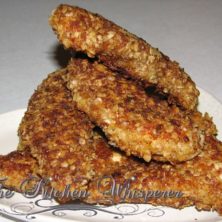
Oat Crusted Chicken Tenders
Why?
I LOOOOOOOOOOOOOVE chicken tenders/fingers/strips. Now let me clarify. I love good ones; not that processed crap you get at a drive thru (sorry but I don’t do beak!) nor will eat mass frozen ones. I want fresh, home style. I want well… mine!
I also love stuff coated in Panko. But after a while, you want something different.
Well tonight was one of those nights. See it was ungodly cold here so I wanted something warm and comforting. Mr. Fantabulous was getting his nightly fix of pasta so I was opting for Turkey Chili. However my thoughts of chili quickly got halted due to my spying chicken tenders that I HAD to use up. Lord knows I hate wasting stuff so back in the freezer the chili went and out came the chicken. On auto-pilot I reached for the panko when I realized I didn’t what ‘that’. I looked around my pantry and spied the bucket of oats. Yes… I have buckets of stuff. So I took them out and rolled a few around in between my fingers. I wasn’t quite sure if they would turn out, if they would burn, if they would even taste good but I threw caution to the wind and went for it.
I figured to go all the way with this oats thing and first put some in the food processor to make a powder out of it. To ensure that it had a good coating, I did throw in a smidge of flour. Made up the egg/milk mixture. I dumped oats into a pie tin and just stared at it. I had no clue what to put in it. I mean oats are sweet but I didn’t want sweet chicken. Since I was already walking the line here, I added in some wing seasoning (even poultry seasoning would work) and added just a smidge of Parmesan cheese.
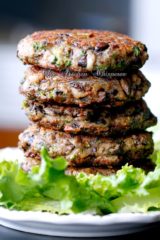
I stood there watching this so closely as the oats browned up fast, almost too fast. Fortunately I was able to lower the heat to medium instead of medium/high and this made all the difference. These things were GORGEOUS! I mean, I was drooling!
So Mr. Fantabulous and I sit down for dinner. Him with his mound of pasta and me with one of these tenders. Let me just say that he actually stopped, put down his fork of pasta and said “Hey! Where’s mine? That looks awesome!” I could have done the “Oh I didn’t make you any since you were eating pasta” but I didn’t.. I can’t be that heartless. I brought the plate of them over and I swear he Hoover-ized the rest of his pasta and dug in to these before I could say “I love you”.
I honestly don’t know if I’d use panko any time soon because of these! I can’t wait to try this on pork chops and also fish – maybe tilapia or cod?
Next time I make these I will make an apricot mustard dipping sauce or honey mustard… or both!
| Oat Crusted Chicken Tenders |
- 1 pound boneless/skinless chicken tenders
- 1 1/2 cups quick cooking oats
- 1/2 cup oats ground into a powder
- 2 Tbl flour or cornstarch (optional)
- 1 egg beaten with 2 Tbl milk
- 1/2 tsp Salt
- 1/2 tsp Pepper
- 2 Tbl Parmesan Cheese
- 1 tsp. Wing Dust/seasoning *any poultry seasoning will work
- Extra virgin olive oil
- Mix the instant oats with the wing dust and Parmesan cheese in a pie plate. Set aside
- In another pie plate, mix the ground oats, flour, salt and pepper. Set aside
- In a third pie plate, beat the egg and milk. Set aside.
- In a 12” skillet, add enough oil to cover the bottom. Heat set to medium.
- Create an assembly line having the chicken furthest from the pan, then the oat/flour, next the egg and last the oats/cheese/wing dust.
- Dredge each tender in the oat/flour mixture; shaking off any excess.
- Dip each piece into the egg, coating completely.
- Last, lay each one down in the oat/cheese/wing dust mixture and coat evenly.
- Using tongs as to not get burned, place each crusted tender in the oil.
- Cook approximately 5-7 minutes each side (flipping only once). Your actual cooking time will vary due to the chicken thickness. To be accurate, use a meat thermometer. You want to shoot for 165F.
- Do not let the oil get super hot else you will burn the crust and the chicken will be raw. A nice medium heat is good.
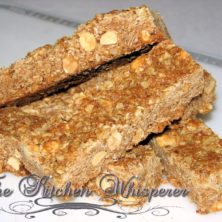
Crunchy Peanut Butter Granola Bars
I had my trusty chewy granola bar recipe but after looking at it, it wasn’t what I wanted. So like most of you, I did some research to see what common ingredients went into them. They are all pretty standard with slight variations on sugar or honey. I cross referenced a bunch and then took bits and pieces from each and came up with my own.
Now this is a first attempt and while it’s good, it’s not “quite right”. It’s missing something and I don’t think next time I’d add the wheat germ. Well I would add it for me but not for Mr. Fantabulous. He wasn’t feeling the wheat germ addition. Oops! My bad
Anywho… I will revamp this and perhaps add some more honey and more peanut butter. This isn’t uberly peanut buttery so you could easily add more if you wanted. Plus for me, I’d need to add mini chocolate chips. I mean seriously, there has never been a more perfect union (other than my marriage to Mr. Fantabulous) then chocolate and peanut butter!
Please give this a shot and let me know what you think it ‘needs’.
| Crunchy Peanut Butter Granola Bars |
- 3 1/2 cups old-fashioned rolled oats
- 2 egg whites, beaten
- 1/4 cup canola oil
- 1/4 teaspoon salt
- 1/3 cup honey
- 1/2 cup packed (3 1/2 ounces) light brown sugar
- 1 teaspoon vanilla
- 1/2 teaspoon cinnamon
- ¼ cup peanut butter
- ¾ cup chopped nuts (toasted) – any variety
- Options: ½ cup mini chips, peanut butter chips, coconut
- Preheat oven to 300.
- Put the rack in the middle.
- Line a 13×9” pan with either foil or parchment paper leaving a 1” overhang. Lightly spray with Pam.
- Place the nuts in a large bowl.
- Add the oats and oil to a 12” skillet over medium heat. Cook for about 5 minutes just until they are lightly toasted. Do not burn!
- Put the oats in the bowl with the nuts and add the salt. Stir to combine.
- Beat the egg whites on medium until light and frothy.
- When the oat mixture is cooled, add the egg whites and mix.
- Place the honey and brown sugar in the skillet and simmer gently over medium-low heat. Stir often as you don’t want it to burn. You only want cook it until the sugar dissolves. ~5 minutes.
- Remove the pan from the heat and add in the vanilla, cinnamon and peanut butter.
- In one swift motion, pour the honey mixture into the oats and mix until thoroughly combined. (I used a wooden spoon that I sprayed with Pam). You have to work fast. Mix it until everything is incorporated.
- Transfer the mixture to the prepared baking pan and pack very firmly into an oven layer. I used the bottom of a metal measuring cup to get it all compacted.
- Bake the granola until golden, 25-35 minutes (just until the edges are slightly browned), rotating the pan halfway through baking. The granola will feel ‘soft’ to the touch in the oven but it will harden once it cools.
- Let the granola cool for 30 minutes or until firm to the touch, lift it out of the pan with the foil/parchment paper and then cut with a very sharp knife.
- Let the bars cool completely before serving.