Posts Tagged ‘tricks’
How to freeze bananas
The other day Mr. Fantabulous wanted a milkshake, a chocolate cake milkshake for that matter. Now while I LOVE these things, they are way too calorie intensive for me and I’d prefer to not have stuff jiggle when I walk! He, on the other hand, can eat anything and not gain a pound! <hate him!> LOL So as I was making his my stomach started to growl which means I was going to give into temptation even though I knew I shouldn’t. Fortunately after I filled his glass there was none left in the blender (aw damn… not.. well okay maybe a small damn). But the grumbling didn’t stop. As I stood there and stared at his luscious shake, I knew I had to make myself one.
You’re probably asking yourself “What in the world is she babbling on about milkshakes? I thought this was a tip about freezing bananas???” It is, haha, trust me! Since I wanted to cut the calories pretty significantly I used frozen bananas instead of ice cream. Now that recipe will be in a future post. But when I shared the picture of it on facebook and I explained that it was without ice cream but with a frozen banana, I was actually pretty taken back by how few knew how to freeze bananas properly. Most just thought you popped the banana in the freezer as-is.
Ever tried this? Sure they are hard as a rock BUT… ever try to peel a frozen banana? Yeah… how’d that work out for you eh? It didn’t right? The peel came off in shreds and was a PITA, right? So that’s what prompted me to write this and give a great tip. So when I make anything banana-y that requires a ripe banana (like banana bread and so forth) I use these. PLUS these little buggers make AWESOME treats (again, future post!).
| How to freeze bananas |
|
- Bunch ripe bananas (no green, bright yellow with minimal brown) *See note
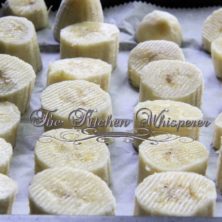
- Peel the bananas and slice into 1” chunks.
- Place the slices on a parchment lined pan.
- Place them in the freezer, uncovered until firm (about 1-2 hours).
- Remove the pan and store in a plastic bag or covered bowl in the freezer.
- When ready to use, add 1 cup of frozen slices to a shake in place of ice cream! Dip in chocolate for a treat, etc.
If they are really brown, peel overripe (one that is really soft and squishy) banana and place in a bowl in the freezer. Cover and freeze.
How to make Bread Flour
I love bread. No, really. I LOVE bread. I swear there is nothing better than a warm slice of freshly baked bread with butter and homemade preserves on it. This, many a nights, has been dinner for me.
Now I know carbs are bad. So… Seriously, so what! I live a very healthy lifestyle, work out like it’s my job so if I wanna have a dinner of butter bread, I am damn it.
QUIT JUDGING ME! LOL
No seriously, I do love my bread but just like everything else in life, it has to be in moderation.
As you can tell on here I have a bunch of bread recipes that call for bread flour. Well not every home cook has bread flour on hand. Just like cake flour and self rising flour, you buy it specifically for a single recipe and then it sits. Why? To me that’s wasting money ESPECIALLY when you can make it yourself using All Purpose flour.
Now the recipe is really, REALLY difficult so I’m going to apologize now.
| How to make Bread Flour |
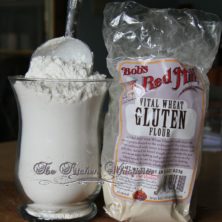
- 1 cup All Purpose Flour
- 1 Tbl Vital Wheat Gluten
- Add both to a bowl, whisk.
- Store in cool, dry, air tight container.
If you are making a big batch of this to store, I’d recommend after you whisk it together to sift the ingredients together this way you will get even distribution.
Store in your container then.
Tough, huh? *wink*
Just in time for the holidays – Pie Baking tips and tricks!
Next to the turkey and stuffing, Thanksgiving is all about pie. Albeit Pumpkin, Apple, Pecan or Chocolate Cream ♥, most people still struggle with making crust from scratch and buying pre-packaged stuff. Stop it! Really, STOP IT! I’ve put together a list of some postings I’ve made regarding making the perfect pie crust.
Pie Baking Tips for Amazing Crusts

Make your own Pie Weights
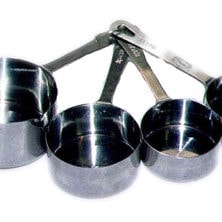
Why are there Dry and Liquid Measuring Cups? What’s the difference?

I am going out on a limp here and guestimating that at least 4 out of every 10 homes now only has 1 set of measuring cups. And this one set is used to measure both dry and liquid ingredients… right? C’mon admit it. You’re probably sitting there right now thinking if you’re one of those 4 people.
Or if you’re one of those 6 homes that have both dry and liquid measuring cups, why do you have them? Well wait…. do you know why you should measure the dry ingredients in the dry measuring cup and the liquid in the liquid ones?
No? Maybe? Don’t care? LOL Hey, you better care there buckaroo!
What’s the difference between dry measuring cups and liquid measuring cups?
Dry measuring cups are meant to be filled right up to the top and then leveled off with a straight edge.
Liquid measuring cups generally have a pour spout and are made to be filled to the gradations on the side of the cup (1/4 cup, 1/2 cup, 6 oz, etc.) rather than being filled right up to the top.
Pretty basic, right?
So then really, why do you need both types?
Well, lemme ‘splain. If you’re measuring a liquid by pouring right to the tippy top of a dry measuring cup you’re just asking for a spill or mess (trust me, I’ve done this). Now, imagine trying to level out flour or rice in a liquid measuring cup. You really can’t get it level due to the spout.
Let me get my engineer’s cap on for a minute. One dry cup is equal to 1.1636 liquid cup, or a little more than 2 (liquid) ounces more. Now this may not be that much of a difference in cooking but in baking it can make a world of difference? It can mean the difference between a “meh” cake and an “AMAZING” cake.
Now if you’re a visual person think of this this way:
When measuring, the line for the liquid cup is under the the top of the cup (right before the spout). For the dry measuring cup the line is the top of the cup. It’s like this for dry ingredients so you can take a knife or spatula and ‘level’ it off to give an even cup or whatever you’re measurement is.
Liquid ingredients are poured in and filled to the appropriate lines. Dry ingredients are scooped in then leveled off.
Dealing with fresh Ginger
Ginger is one of those “fairly” new things to American cooking. I mean we used powdered ginger in cooking and baking but it wasn’t really well known in traditional daily cooking. Now with the evolution of Asian, Thai, Indian and other ethnic-type restaurants and celebrity chefs fresh ginger is almost as common as garlic.
Fresh ginger is the funkiest looking thing ever. It’s bumpy, has ‘legs’ everywhere and just well.. is funky looking.

See… it’s all deformed. And the texture of the ‘skin’. It’s just weird.
But the taste.. that wonderful sweet spicy taste! Fresh ginger’s tangy freshness, light spiciness, warmth, and mellow sweetness complement a range of dishes, from sweet to savory. Though fresh ginger packs the most punch, it comes in a variety of forms: pickled, dried and ground, and crystallized; the latter two forms are used primarily in baking.
Choosing Fresh Ginger
Look for ginger with skin (the thinner the better) that’s smooth, unblemished, and almost translucent. When you break off the piece you want, the interior should be firm, crisp, and not overly fibrous (making it easier to slice). It should have a fresh, spicy fragrance.

How to get the skin off:
You want to peel the ginger. Because of the twist, knobs and turn, a vegetable peeler may be way too difficult to use. Try using the edge of a metal spoon to scrape off the skin. It takes a bit more effort than a paring knife or a peeler, but it’s less wasteful—and it lets you maneuver around the knobs and gnarls. Ginger can be sliced into planks or matchsticks, chopped, grated, puréed, and minced. Keep in mind that, like many spices, ginger’s flavor fades as it cooks. So for more gingery oomph, add some or all of the ginger at the end of cooking.
Storing Fresh Ginger:
Probably the most important thing here is how to store it once you’ve peeled it. For me, the best way is to clean 1 whole fresh piece, cut into sections, peel and then store in a freezer bag in the freezer. Everytime I need a piece or some, I’ll pull it out, grate it/slice it/ chop it and then put the remaining piece back into the bag.